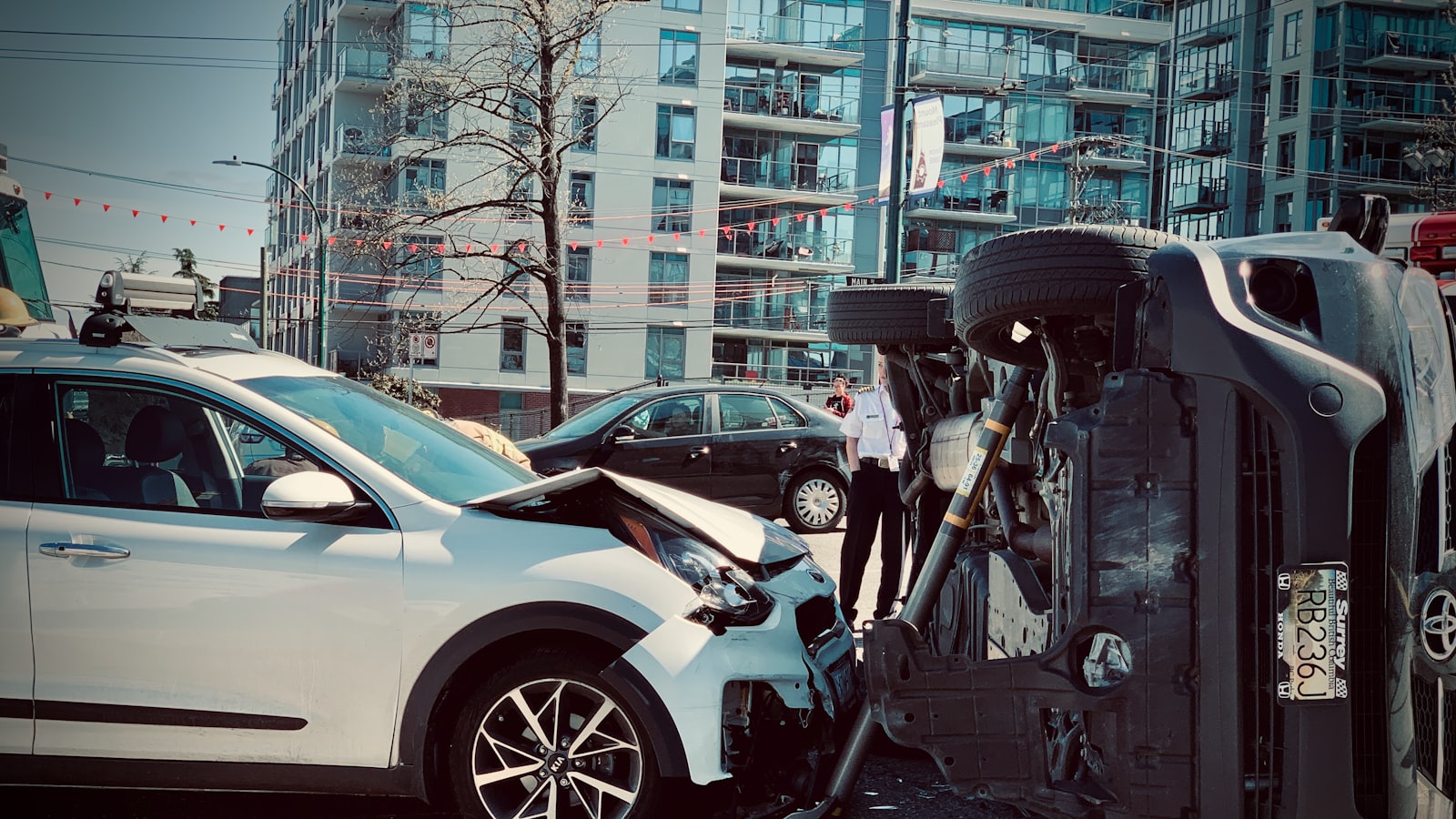
Ontario apportions responsibility rather than treating it as all or nothing. If you were partly at fault, compensation is generally reduced by your share rather than eliminated, and accident benefits do not depend on fault at all.
Fault is divided, not assigned
Ontario allocates responsibility in percentages. A finding that you were partly responsible reduces what you recover in proportion. It does not remove the claim.
People routinely assume the opposite and never speak to anyone about it, which is how valid claims quietly disappear.
Accident benefits do not care whose fault it was
Whatever the apportionment, accident benefits come from your own insurer regardless of fault. Treatment funding does not wait for a liability determination.
Early fault findings are not final
An insurer's initial assessment, or a police report, is evidence rather than a verdict. Both are regularly revised once reconstruction evidence, footage and independent witnesses are examined.
Reports written at the scene often reflect only the account of whoever was in a condition to give one.
The things people wrongly assume end a claim
Not wearing a helmet while cycling. Crossing outside a crosswalk. Wearing unsuitable footwear on ice. Each may affect the share of responsibility. None of them is automatically a complete answer to a claim.
Deadlines that apply to you
These are the dates that end claims. Check them first.
In most Ontario claims you have two years from the day you knew, or ought to have known, that you had a claim.
Limitations Act, 2002, S.O. 2002, c. 24, Sched. B, s. 4
Tell your own auto insurer about the collision as soon as you reasonably can, and no later than seven days.
Statutory Accident Benefits Schedule, O. Reg. 34/10, s. 32(1)
Questions we get every week
Possibly. It is likely to affect the apportionment, but Ontario reduces recovery by your share rather than removing it.
No. A police report is one piece of evidence and is regularly contradicted by reconstruction and footage.
No. Accident benefits are payable regardless of fault.
Where this applies
Car Accidents
After a car accident in Ontario you usually have two separate claims running at the same time: accident benefits from your own insurer regardless of who caused the crash, and a claim against the driver at fault.
Read moreCyclist and Pedestrian
Pedestrians and cyclists hit by a vehicle in Ontario can claim accident benefits even though they were not driving.
Read moreAccident Benefits
Accident benefits are paid by your own auto insurer regardless of who caused the collision.
Read more